
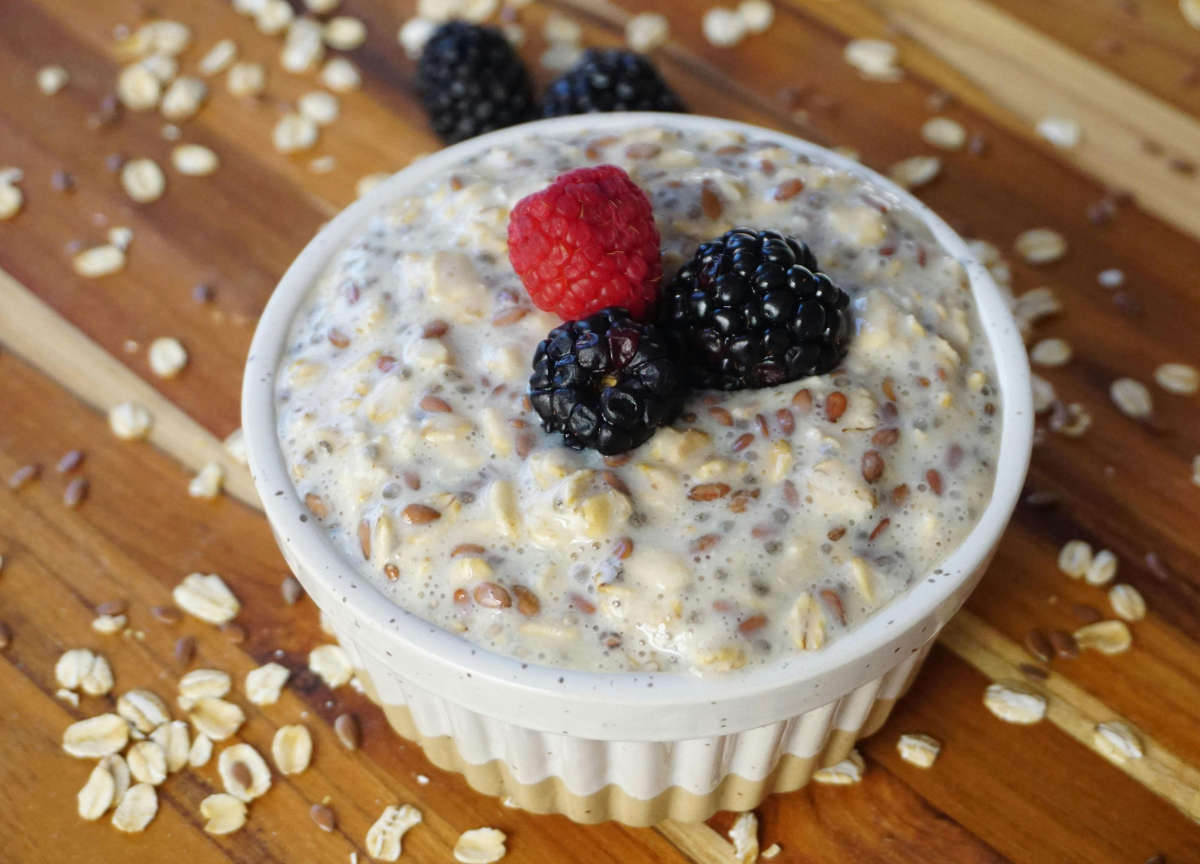
A warm bowl of oatmeal feels like one of those breakfasts everyone agrees is “healthy” — but does it actually help with weight loss, or is that just an assumption we’ve all inherited? Let’s look at what the research actually says, and how to make your bowl work for you instead of against you.
Is Oatmeal Good for Weight Loss?
Yes — when you make it the right way. Oats are rich in a soluble fiber called beta-glucan, which forms a gel-like texture in your stomach. This slows digestion, keeps you feeling full for longer, and can naturally reduce how much you eat later in the day. Oats also provide plant-based protein and a steady release of energy, both of which support healthy weight management over time.
The Science Behind Oatmeal and Weight Loss
Beta-glucan doesn’t just fill you up — it may also trigger the release of hormones linked to satiety, helping you feel satisfied with less. This is backed by a review of clinical trials on oat beta-glucan, which found that high-quality randomized trials showed a real link between beta-glucan intake and reductions in body weight, BMI, and body fat — even without cutting calories elsewhere in the diet. A smaller study of 106 women who added oats to a reduced-calorie diet for eight weeks saw real improvements in waist size, body fat percentage, and blood pressure.
Here’s the honest part, though: a separate study found that eating oat fiber alone — without any other change to diet or activity — didn’t lead to weight loss on its own. In other words, oatmeal helps you eat less by keeping you fuller for longer. It doesn’t burn fat by itself. You still need an overall calorie balance for weight loss to happen — oatmeal just makes that balance easier to stick to.
Oatmeal and Blood Sugar
Oats also have a naturally low glycemic index (GI), meaning they raise blood sugar more slowly than many other breakfast foods. This makes them a smart choice if you’re managing blood sugar alongside weight — steady energy, fewer crashes, and less mid-morning hunger.
Which Oats Should You Choose?
Not all oats behave the same way in your body:
- Steel-cut oats — least processed, low GI, takes 20–30 minutes to cook
- Old-fashioned (rolled) oats — also low GI, ready in about 5 minutes
- Instant oats — more processed, digested faster, and often the highest GI of the three — especially flavored packets, which usually contain added sugar
If you’re short on time, overnight oats are a great middle ground — just soak old-fashioned oats in milk or yogurt the night before, and breakfast is ready by morning with no cooking required.
How to Make Oatmeal for Weight Loss
Plain oats alone aren’t a complete breakfast — pairing them with the right additions makes a real difference:
- Add protein: milk, Greek yogurt, egg whites, or a scoop of protein powder
- Add fiber: fresh fruit like berries or banana, or a spoon of chia or flax seeds
- Skip the sugar: flavor naturally with cinnamon or fruit instead of syrup or brown sugar
- Watch your portion: a half-cup of dry oats (about 150 calories) is a good baseline serving
Does Oatmeal Make You Gain or Lose Weight?
It genuinely depends on what you put in the bowl. Plain oats made with water or milk, topped with fruit and a bit of protein, support weight loss. Oatmeal loaded with sugar, honey, chocolate chips, or heavy cream-based toppings can just as easily lead to weight gain. The oats themselves aren’t the issue — it’s what surrounds them.
Final Thoughts
Oatmeal isn’t a miracle food, and it won’t melt fat away on its own — but it’s a genuinely smart, filling breakfast when you build it thoughtfully. Choose steel-cut or old-fashioned oats over instant, add a source of protein, keep added sugar low, and let it do what it does best: keep you full and steady until your next meal.
Want a personalized breakfast and meal plan built around your goals? Book a free consultation today.