
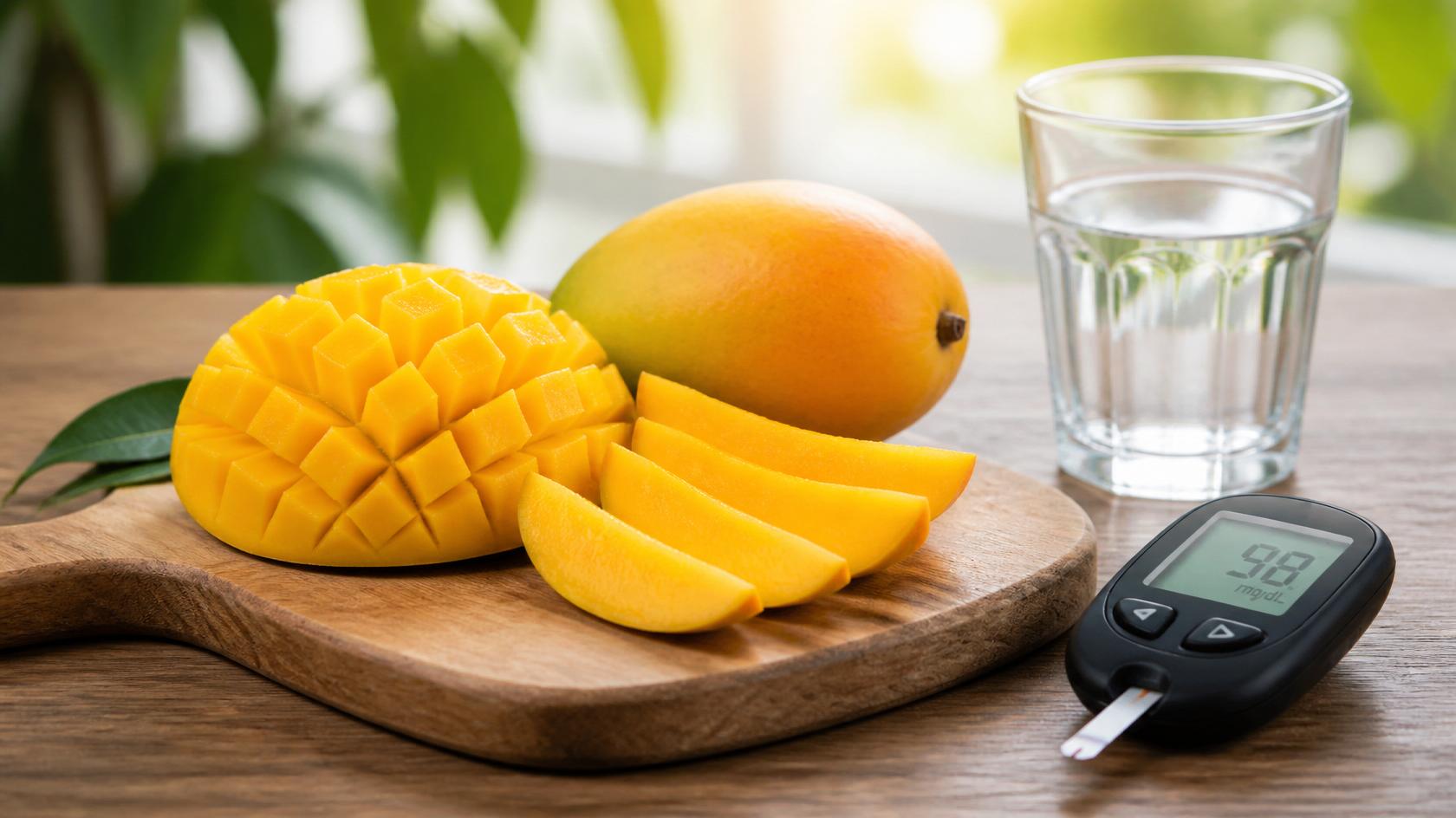
For years, the arrival of mango season came with a quiet heartbreak for anyone managing diabetes: the king of fruits was labelled “forbidden.” Sweet, juicy, irresistible, and, everyone assumed, off-limits. But here’s the surprising part: the science tells a very different story, and it’s better news than you’d expect.
So, can diabetics eat mango? The short answer is yes — with the right portion, timing, and a little know-how. Let’s look at what mango actually does to your blood sugar, and why the latest research is changing how experts think about mango and diabetes.
Does Mango Raise Blood Sugar?
Mango contains natural sugar, so like any carbohydrate it can raise blood sugar. But it doesn’t spike it the way many people fear. That’s because mango also delivers fiber and antioxidants that slow down how quickly sugar enters your bloodstream.
The key number is the glycemic index. Mango’s glycemic index sits around 51–56 — which is actually on the lower end (anything under 55 is considered low). This means mango raises blood sugar more gently than high-GI foods like white bread or sugary drinks.
The Latest Research on Mango and Diabetes
Here’s what’s exciting: a 24-week study looked at adults with prediabetes who ate a fresh mango every day, compared to a calorie-matched granola bar. Despite mango containing more natural sugar, the mango group showed better blood sugar readings and healthier body composition than the snack-bar group.
The takeaway is powerful, a whole fruit like mango, with its natural fiber and nutrients, behaves very differently from processed, refined snacks with the same calories. For people with prediabetes especially, swapping a packaged snack for fresh fruit may actually support better blood sugar control.
How Much Mango Can a Diabetic Eat?
Portion is everything. Most experts suggest starting with about half a cup of sliced mango (roughly 100 grams, or 2–3 small slices) and seeing how your body responds. From there you can adjust based on your own blood sugar readings.
- Stick to small portions rather than a whole mango in one sitting.
- Enjoy it a few times a week, not necessarily every day, unless your levels stay stable.
- Choose mangoes that are ripe but not overripe, since very ripe fruit has more concentrated sugar.
Smart Ways to Enjoy Mango Without a Blood Sugar Spike

A few simple habits make a big difference in how mango affects your blood sugar:
Pair It with Protein or Healthy Fat
Eating mango alongside a protein or healthy fat, like yogurt, a handful of nuts, seeds, or a piece of cheese — slows sugar absorption and keeps your levels steadier than eating it alone.
Mind the Timing
The best time to eat mango is as a mid-morning or evening snack between meals, rather than right after a full meal. This avoids stacking mango’s carbs on top of other carbs. Also try not to eat it on an empty stomach, which can cause a quicker rise.
Eat the Whole Fruit, Skip the Juice
Always choose fresh, whole mango over mango juice or dried mango. Juicing strips away the fiber and concentrates the sugar, causing a faster spike, and dried mango is very high in sugar for its size. Sweetened mango shakes and desserts are best kept as rare treats.
A Note on Everyone Being Different
Diabetes is not one-size-fits-all. Some people manage with lifestyle changes, others use medication, and blood sugar responses to the same food can vary from person to person. The only way to know how mango affects you is to check your blood sugar before and about two hours after eating it.
If you’re unsure how mango fits into your plan, or you’re on medication, it’s always best to check with your doctor or dietitian first.
Final Thoughts
Mango doesn’t have to be the forbidden fruit. With sensible portions, smart pairing, good timing, and whole fresh fruit instead of juice, most people managing diabetes can enjoy the king of fruits this season, without guilt.
Because the right amount depends on your body and your goals, a personalised plan makes it easier to enjoy the foods you love while keeping your blood sugar in check. Our dietitian can build a diabetes-friendly plan tailored to you, book a free consultation to get started.
Note: This article is for general information only and is not medical advice. Always consult your doctor or a qualified dietitian before making changes to your diet, especially if you take medication for diabetes.